


ZHOU Jing
Professor
I. Personal statement
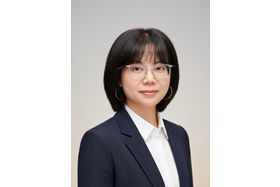
 Dr. ZHOU Jing
Professor
ORCID: 0000-0002-2211-4901
Prof. Jing Zhou is a Tenured Professor at the Peking University Health Science Center, Boya Distinguished Professor of Peking University, and Associate Chair of the department. She is a Principal Investigator of the State Key Laboratory of Vascular Homeostasis and Remodeling. She is a recipient of the Distinguished Young Scholars (Category A) and Excellent Young Scholars (Category B) awards from the National Natural Science Foundation of China.
Prof. Zhou received her Ph.D. from the College of Bioengineering, Chongqing University in 2006. She subsequently completed postdoctoral training at the Institute of Biochemistry and Cell Biology, Shanghai Institutes for Biological Sciences, Chinese Academy of Sciences; the Medical Engineering Research Group of the National Health Research Institutes (Taiwan); and the Institute of Engineering in Medicine, University of California, San Diego. From 2011, she served as Assistant Project Scientist at the Institute of Engineering in Medicine, UC San Diego. In 2014, she joined Peking University Health Science Center under the “Peking University Hundred Talents Program.”
II. Research Areas and Contributions
Prof. Zhou’s laboratory focuses on mechanobiology and the molecular mechanisms underlying vascular diseases, with particular emphasis on how mechanical forces are sensed and transduced to regulate vascular homeostasis and remodeling. Major research areas and representative contributions include:
1. Mechanosensing and Phase Separation
The laboratory investigates mechanically induced liquid-liquid phase separation (LLPS) in vascular remodeling. They have shown that mechanosensitive molecules such as the receptor tyrosine kinase DDR1 and the focal adhesion protein Kindlin-2 undergo phase separation in response to shear stress or matrix stiffness, thereby modulating mechanotransduction pathways and influencing vascular homeostasis and the development of diseases such as atherosclerosis.
2. Mechanical-Epigenetic Regulation
The group has identified and validated DNA methyltransferase 1 (DNMT1) as a key mediator in mechanical force-induced epigenetic regulation of vascular cell function. Their studies demonstrate that matrix stiffness and disturbed flow regulate inflammatory responses in vascular smooth muscle cells, endothelial-to-mesenchymal transition, and mitochondrial metabolism through DNA methylation. In addition, mitochondrial DNA methylation has been shown to affect cellular energy metabolism and contractile function.
3. Metabolic Reprogramming
The laboratory explores how mechanical cues regulate metabolic pathways in vascular cells. Their work indicates that geometric constraints influence smooth muscle cell metabolism via mitochondrial DNA methylation. They have further shown that MFN2 suppresses glycolysis by modulating PFK1 stability, whereas mechanical activation of cPLA2 inhibits fatty acid oxidation. These mechanisms contribute to processes such as vein graft restenosis.
In addition, the group develops and applies innovative tools and methodologies, including genetically encoded FRET-based biosensors for real-time visualization of mechanotransduction-related molecular events in living cells, and mechanoresponsive nanodelivery systems targeting regions of disturbed blood flow.
III. Professional Service
Vice Chair, Vascular Branch, Chinese Society for Anatomical Sciences
Committee Member, Matrix Biology Committee, Chinese Physiological Society
Committee Member, Biomechanics Committee, Chinese Society of Biomedical Engineering
Committee Member, Mechanobiology Branch and Single-Molecule Biophysics Branch, Biophysical Society of China
IV. Research Funding
Prof. Zhou has served as Principal Investigator for multiple grants from the National Natural Science Foundation of China, including the Distinguished Young Scholars Program, Excellent Young Scholars Program, Young Scientists Fund, two Major Research Plan projects, and three General Program grants. She has also received funding from the Beijing Natural Science Foundation, including the Non-Consensus Innovation Program and General Program grants.
V. Selected Publications
For a complete list of peer-reviewed publications, please refer to ORCID: 0000-0002-2211-4901.
Liu JY#*, Chen J#, Chen QY, Li HB, Gui LX, Zhou J*, Lin MJ*. Liquid-liquid phase separation of EphB4 drives pulmonary hypertension via YAP activation. Cell Rep. 45(2):116992. 2026.
Liu Y, Zhao C, Liang Z, Xu Y, Liu J, Yao W*, Zhou J*. APEX1-STAT3 signaling mediates the force-coordinated endothelial regeneration. Cell Mol Life Sci. 82(1):321. 2025.
Fan L, Tang Y, Liu J, Liu Y, Xu Y, Liu J, Liu H, Pang W, Guo Y, Yao W, Zhang T*, Peng Q*, Zhou J*. Mechanical Activation of cPLA2 Impedes Fatty Acid β-Oxidation in Vein Grafts. Adv Sci (Weinh). e2411559. 2025.
Ma N, Wu F, Liu J, Wu Z, Wang L, Li B, Liu Y, Dong X, Hu J, Fang X, Zhang H, Ai D, Zhou J*, Wang X*. Kindlin-2 Phase Separation in Response to Flow Controls Vascular Stability. Circ Res. 135(12):1141-1160. 2024.
Liu J#, Li Q#, Wang J#, Qiu J*, Zhou J*, Peng Q*. Genetically Encoded Fluorescence Resonance Energy Transfer Biosensor for Live-Cell Visualization of Lamin A Phosphorylation at Serine 22. Biomater Res. 28:0091. 2024.
Liu J#, Zhao C#, Xiao X, Li A, Liu Y, Zhao J, Fan L, Liang Z, Pang W, Yao W, Li W*, Zhou J*. Endothelial discoidin domain receptor 1 senses flow to modulate YAP activation. Nat Commun. 14(1):6457. 2023.
Liu J#, Wang J#, Liu Y, Xie S, Zhang J, Zhao C, Zhou Y, Pang W, Yao W, Peng Q, Wang X*, Zhou J*. Liquid-liquid phase separation of DDR1 counteracts the Hippo pathway to orchestrate arterial stiffening. Circ Res. 132(1):87-105. 2023.
Zhao J, Zhao C, Yang F, Jiang Z, Zhu J, Yao W, Pang W, Zhou J*. DNMT1 mediates the disturbed flow-induced endothelial to mesenchymal transition through disrupting b-alanine and carnosine homeostasis. Theranostics. 13(13):4392-4411. 2023.
Zhang J, Xie S, Wang J, Liu J, Liu Y, Zhou S, Li X, Han L, Pang W, Yao W, Fu Y, Kong W, Ye M*, Zhou J*. Echinatin maintains glutathione homeostasis in vascular smooth muscle cells to protect against matrix remodeling and arterial stiffening. Matrix Biol. 119:1-18. 2023.
Zhao C#, Yang Q#, Tang R#, Li W, Wang J, Yang F, Zhao J, Zhu J, Pang W, Li N, Zhang X, Tian XY, Yao W*, Zhou J*. DNA methyltransferase 1 deficiency improves macrophage motility and wound healing by ameliorating cholesterol accumulation. NPJ Regen Med. 8(1):29. 2023.
Zhao CR#, Li J#, Jiang ZT#, Zhu JJ, Zhao JN, Yang QR, Yao WJ, Pang W, Li N, Yu M*, Gan Y*, Zhou J*. Disturbed flow-facilitated margination and targeting of nanodisks protect against atherosclerosis. Small. e2204694. 2022.
Liu H#, Liu Y#, Wang H, Zhao Q, Zhang T, Xie SA, Liu Y, Tang Y, Peng Q, Pang W, Yao W, Zhou J*. Geometric Constraints Regulate Energy Metabolism and Cellular Contractility in Vascular Smooth Muscle Cells by Coordinating Mitochondrial DNA Methylation. Adv Sci (Weinh). e2203995. 2022.
Tang Y, Jia Y, Fan L, Liu H, Zhou Y, Wang M, Liu Y, Zhu J, Pang W*, Zhou J*. MFN2 Prevents Neointimal Hyperplasia in Vein Grafts via Destabilizing PFK1. Circ Res. 130(11):e26-e43.2022.
Wang J#, Xie S#, Li N, Zhang T, Yao W, Zhao H, Pang W, Han L, Liu J, Zhou J*. Matrix stiffness exacerbates the proinflammatory responses of vascular smooth muscle cell through the DDR1-DNMT1 mechanotransduction axis. Bioact Mater. 17:406-424. 2022.
Zhao CR, Yang FF, Cui QH, Wang D, Zhou YR, Li YS, Zhang YP, Tang RZ, Yao WJ, Wang X, Pang W, Zhao JN, Jiang ZT, Zhu JJ, Chien S*, Zhou J*. Vitexin Inhibits APEX1 to Counteract the Flow-Induced Endothelial Inflammation. Proc Natl Acad Sci U S A. 118(48): e2115158118, 2021.
Liu YF#, Zhu JJ#, Tian XY, Liu H, Zhang T, Zhang YP, Xie SA, Zheng M, Kong W, Yao WJ, Pang W, Zhao CR, Tang YJ, Zhou J*. Hypermethylation of Mitochondrial DNA in Vascular Smooth Muscle Cells Impairs Cell Contractility. Cell Death Dis. 11 (1), 35, 2020.
Xie SA, Zhang T, Wang J, Zhao F, Zhang YP, Yao WJ, Hur SS, Yeh YT, Pang W, Zheng LS, Fan YB, Kong W, Wang X, Chiu JJ, Zhou J*. Matrix stiffness determines the phenotype of vascular smooth muscle cell in vitro and in vivo: Role of DNA methyltransferase 1. Biomaterials. 155:203-216. 2018
Zhu JJ#, Liu YF#, Zhang YP, Zhao CR, Yao WJ, Li YS, Wang KC, Huang TS, Pang W, Wang XF, Wang X, Chien S*, Zhou J*. VAMP3 and SNAP23 mediate the disturbed flow-induced endothelial microRNA secretion and smooth muscle hyperplasia. Proc Natl Acad Sci U S A. 114(31):8271-8276, 2017.
VI. Laboratory Members
Faculty and Staff
Jing Zhou, Professor
Weijuan Yao, Associate Professor
Lili Han, Chief Technician
Graduate Students
Shuang Zhou, Xueyu Geng, Yiwei Xu, Ke Gui, Zhenhui Liang, Yuhang Shen, Di Zhao, Yujing Feng, Jiayi Wen, Zichun Wu, Wanyu Hu, Zejun Yue, Xiao Han, Kaiyuan Yu, et al.
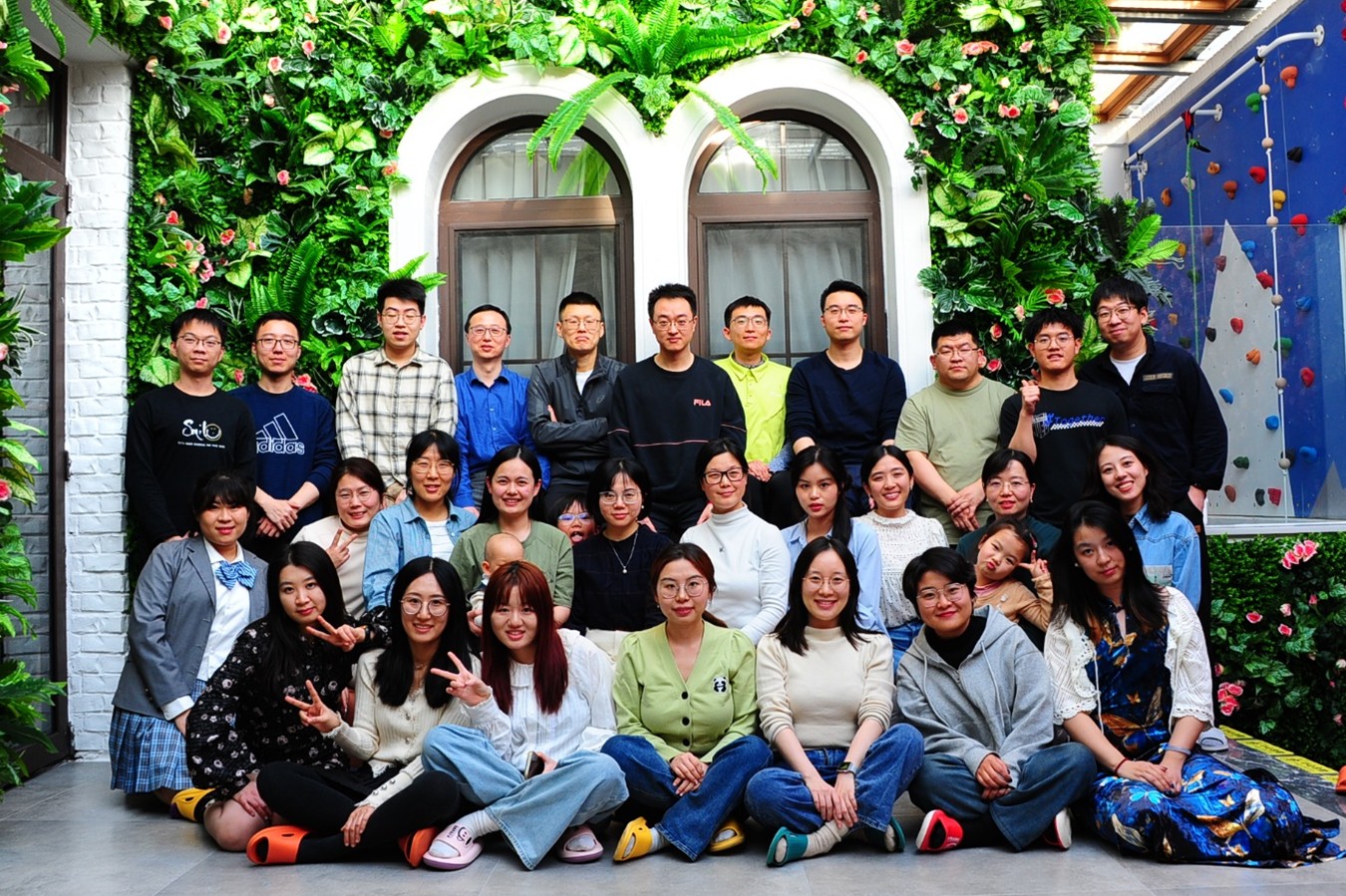
Group photo commemorating the 10th anniversary of the laboratory
VII. Contact Information
Jing Zhou
Office: Room 306, Physiology Building
Email: jzhou@bjmu.edu.cn
Phone: +86-10-82801447
Weijuan Yao
Office: Room 312, Physiology Building
Email: weijuanyao@bjmu.edu.cn
Phone: +86-10-82802419
Lili Han
Office: Room 303, Physiology Building
Graduate Students
Office: Rooms 308 and 309, Physiology Building