


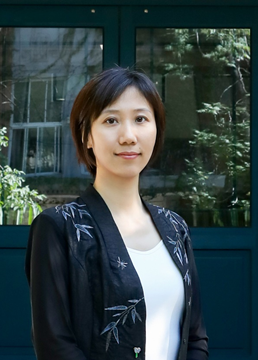
Zheng Qiaoxia
Professor
1. Personal statement
Dr. Qiaoxia Zheng
Tenure Associate Professor,
Investigator
Dr. Qiaoxia Zheng is an Assistant Professor in the Department of Physiology and Pathophysiology, Peking University. She is also an Visiting Professor in the Lab of Academician Hong Zhang, National Laboratory of Biomacromolecules, Institute of Biophysics, Chinese Academy of Sciences.
Dr. Zheng obtained her undergraduate degree from Xiangya School of Medicine, Central South University, and her master's degree from the Institute of Zoology, Chinese Academy of Sciences. She earned her Ph.D. in Integrative Life Sciences from Peking University in 2018. Following her Ph.D., she conducted postdoctoral training at the National Laboratory of Biomacromolecules, Institute of Biophysics, Chinese Academy of Sciences, where she was later appointed as an Associate Researcher. In 2024, she joined the Department of Physiology and Pathophysiology, School of Basic Medical Sciences at Peking University.
Dr. Zheng's research primarily focuses on the biological functions of Ca2+ signaling under both physiological and pathological conditions, particularly examining the spatiotemporal dynamics of calcium concentrations within subcellular structures such as the endoplasmic reticulum, lysosomes, mitochondria, and cell membranes. Her work investigates how these dynamics influence signaling pathways, with a particular focus on their roles in autophagy regulation and disease mechanisms. Her research has been published in highly impacted scientific journals, including Cell, Molecular Cell, Developmental Cell, Journal of Cell Science, Nature Communications, and Hypertension.
2. Research interest
1)Mechanistic study of calcium signaling and calcium ion channels in cardiac and cardiovascular-related physiological and pathological processes.
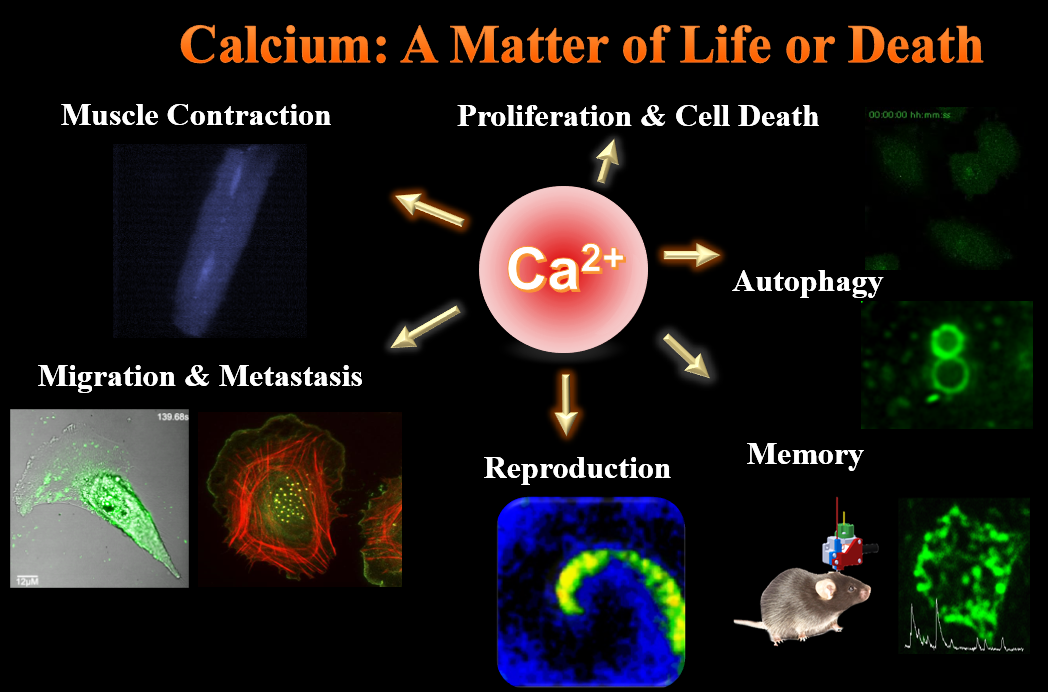
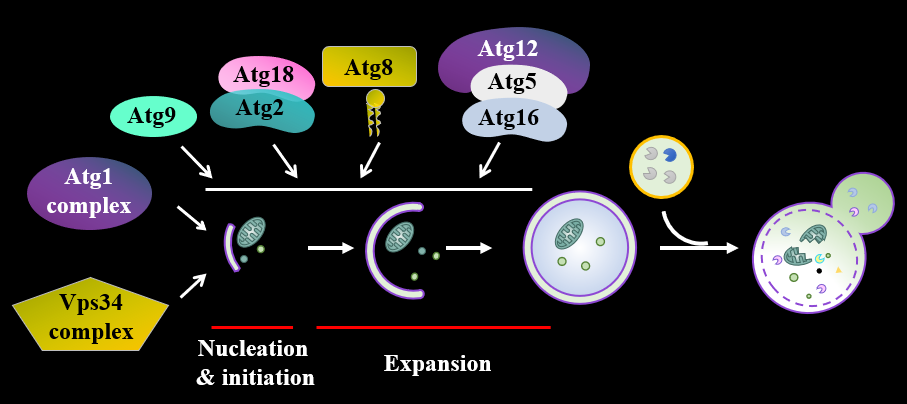
2)Role of local spatial calcium ions in the regulation of autophagy in specific cells and related diseases.
3)Development of efficient lysosomal calcium ion probes based on super-resolution imaging.
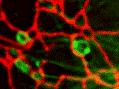
①Lysosome and endoplasmic reticulum
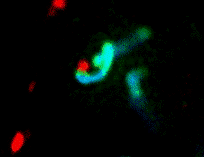
②Lysosome involvement in mitochondrial fission

③Lysosomal calcium release induces endoplasmic reticulum calcium release
④Lysosomal calcium release induces phase transition of proteins
3. Significant grants
2025-2028 National Key Research and Development “Young Scientist Project”,
2024-2026 National Natural Science Foundation for for Excellent Young Scholars,
2020-2022 National Natural Science Foundation for Young Scientists of China,
4. Selected Publications
⑴ Zheng Qiaoxia, Huan Zhang, Hongyu Zhao, Yong Chen, Hongzhining Yang, Tingting Li, Qixu Cai, Yingyu Chen3, Youjun Wang, Mingjie Zhang, Hong Zhang. Ca2+/calmodulin-dependent protein kinase II β decodes ER Ca2+ transients to trigger autophagosome formation. Molecular Cell, 2025, 85(3):464-465.
⑵ Qiaoxia Zheng, Yong Chen, Di Chen, Hongyu Zhao, Yun Feng, Quan Meng, Yan Zhao, Hong Zhang. Calcium transients on the ER surface trigger liquid-liquid phase separation of FIP200 to specify autophagosome initiation sites. Cell, 2022, 185(22): 4082-4098.
⑶ Di Chen, Qiaoxia Zheng, Long Sun, Mingming Ji, Yan Li, Hongyu Deng, Hong Zhang. ORF3a of SARS-CoV-2 promotes lysosomal exocytosis-mediated viral egress. Development Cell, 2021, 56(23): 3259-3263.
⑷ Jianwei Li, Caizhi Liu, Yuheng Li, Qiaoxia Zheng, Youjia Xu, Beibei Liu, Weijia Sun, Yuan Li, Shuhui Ji, Mingwei Liu, Jing Zhang, Dingsheng Zhao, Ruikai Du, Zizhong Liu, Guohui Zhong, Cuiwei Sun, Yanqing Wang, Jinping Song, Shu Zhang, Jun Qin, Shukuan Ling, Xianhua Wang, Yingxian Li. TMCO1-mediated Ca2+ leak underlies osteoblast functions via CaMKII signaling. Nature Communications, 2019, 10(1589): 1-14.
⑸ Fujian Lu, Jianwei Sun, Qiaoxia Zheng, Jinghang Li, Yuanzhao Hu, Peng Yu, Huifang He, Yan Zhao, Xianhua Wang, Shengyuyang, Heping Cheng. Imaging Elemental Events of Store-operated Ca2+ Entry in Invading Cancer Cells with Plasmalemmal Targeted Sensors. Journal of Cell Science, 2019,132(6): 1-10.
⑹ Jingjing Ye, Qiaoxia Zheng, Shijia, Xue Qiao, Yangpo Cao, Chunling Xu, Lin Weng, Lifang Zhao, Yingyu Chen, Jian Liu, Tianbing Wang, Heping Cheng, Ming Zheng. Programmed Cell Death 5 Provides Negative Feedback on Cardiac Hypertrophy Through the Stabilization of Sarco/Endoplasmic Reticulum Ca2+-ATPase2a Protein. Hypertension, 2018, 72(4): 889-901.
⑺ Qiaochu Wang, Qiaoxia Zheng, Haiyan Tian, Bing Zhang, Xiaoling Li, Yuxiu Yang, Jie Yu, Yang Liu, Hao Chai, Xi Wang, Zhongshuai Sun, Jiu-Qiang Wang, Shu Zhu, Fengli Wang, Maojun Yang, Caixia Guo, Heng Wang, Qingyin Zheng, Yang Li, Quan Chen, Aimin Zhou, Tieshan Tang. TMCO1 Is an ER Ca2+ Load-Activated Ca2+ Channel. Cell, 2016, 165(6): 1454-1466.
⑻ Yong Liu, H Cheng, Y Zhou, Yushan Zhu, R Bian, Y Chen, C Li, Qi Ma, Qiaoxia Zheng, Quan Chen, Dahai Zhu. Myostatin induces mitochondrial metabolic alteration and typical apoptosis in cancer cells. Cell Death & Disease, 2013, 4(e494): 1-11.
⑼ Lei Liu, Du Feng, Guo Chen, Ming Chen, Qiaoxia Zheng, Pingping Song, Qi Ma, Chongzhuo Zhu, Rui Wang, Wanjun Qi, Lei Huang, Peng Xue, Baowei Li, Xiaohui Wang, Haijing Jin, Jun Wang, Fuquan Yang, Pingsheng Liu, Yushan Zhu, Senfang Sui, Quan Chen. Mitochondrial outer-membrane protein FUNDC1 mediates hypoxia-induced mitophagy in mammalian cells. Nature Cell Biology, 2012, 14(2): 177-185.
⑽ Yanmin Huang, Jianguo Cui, Qiaoxia Zheng, Chun Zeng, Quan Chen, Aimin Zhou. 6- Hydroximino-4-aza-A-homo-cholest-3-one and related analogue as a potent inducer of apoptosis in cancer cells. Steroids, 2012, 77(8-9): 829-834.
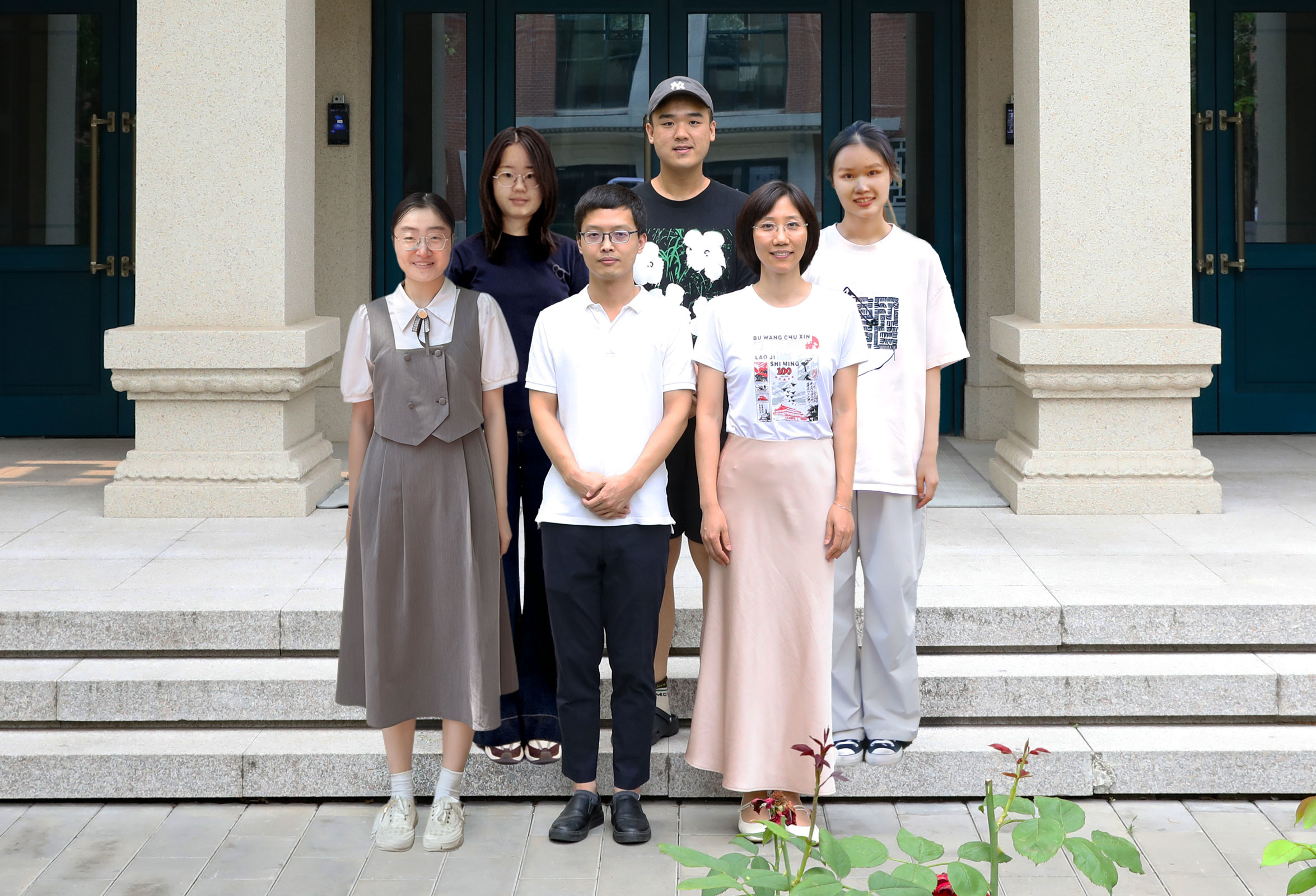
5. Lab members
6. Contact information
Department of Physiology and Pathophysiology
Peking University Health Science Center
Xueyuan Road 38, Haidian District
Tel: +86-10-82802403
Email: zhqiaoxia@bjmu.edu.cn