


Sun Jinpeng
Professor
1. Personal Profile
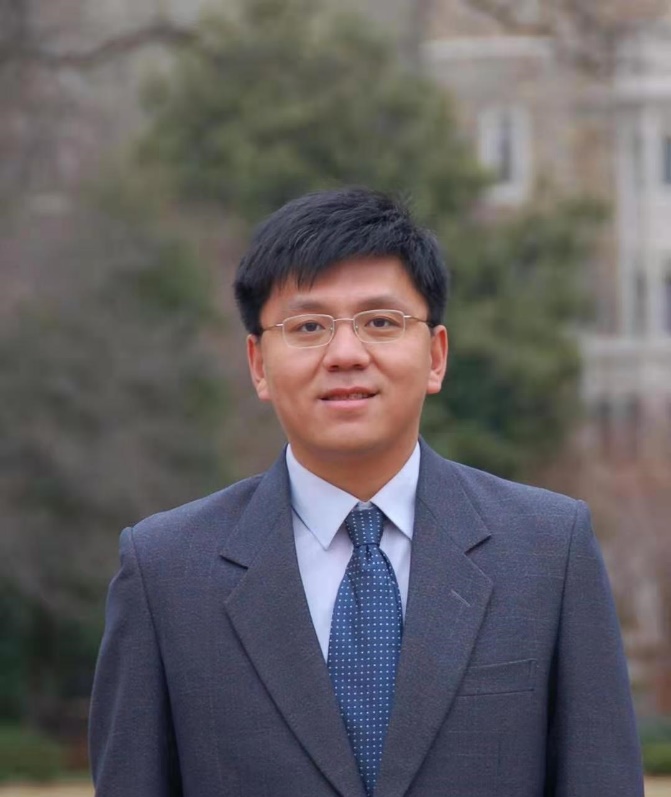
Jinpeng Sun, Principal Investigator, National Distinguished Young Scholar and Continuous Funding (Pharmacology, 2018, 2024), New Cornerstone Investigator (2023)
Professor Jinpeng Sun has long been engaged in research on G protein-coupled receptors (GPCRs). He has systematically investigated the mechanisms by which GPCRs sense microenvironments and regulate physiological functions, elucidating the molecular mechanisms underlying GPCR sensing of acidic/alkaline microenvironments, itch, olfaction, mechanical force, and carbon-carbon double bonds. He discovered GPCR receptors for auditory and vestibular sensation, identified a subfamily of membrane receptors recognizing steroid hormones, and identified membrane receptors for ceramide. He has achieved the deorphanization of multiple important endogenous GPCR ligands. He also proposed a series of working models for GPCR bias signaling, including the "Flute Model" of GPCR signal transduction and the "Proline Docking Bifurcation" theory, laying the theoretical foundation for the development of GPCR-biased ligands. To date, he has published over 80 papers as corresponding author in SCI-indexed journals including Nature (9 papers), Science (2 papers, cover story), Cell (9 papers, 1 cover story), Nature Metabolism (2 papers), Cell Metabolism (2 papers), Nature Chemical Biology (4 papers), Cell Research (2 papers), PNAS (6 papers), and Nature Communications (10 papers). He has been invited to deliver keynote speeches at international and domestic academic conferences, generating extensive academic impact. He has received funding from the New Cornerstone Investigator Program (2023), National Distinguished Young Scholar Award (2018), Tan Jiazhen Life Science Innovation Award (2022), Chinese Medical Science and Technology Award—Second Prize in Medical Science and Technology (2022), and the 3rd National Award for Innovation and Excellence (2023). He currently leads multiple grants including National Key R&D Program projects from the Ministry of Science and Technology, key projects and general projects from the National Natural Science Foundation of China, and key projects from Beijing Municipality.
2. Research Directions and Fields
Main Research Directions:
GPCR Microenvironment Pharmacology
GPCR Sensory Pharmacology
Membrane Receptor Pharmacology
Research Fields:
His team has elucidated various coding mechanisms by which GPCRs sense microenvironmental changes such as itch, olfaction, audition, and mechanical force, and has explored auditory and vestibular receptors. They discovered a subfamily of membrane receptors recognizing steroids; developed systematic ligand-receptor screening methods, achieving the deorphanization of over 20 important GPCRs, including the identification of endogenous ligands for multiple drug target receptors in metabolic processes, such as insulin peptide ligands for the olfactory receptor OLFR109 in pancreatic islets and fatty acid ligands for GPR120 and GPR132, providing intervention strategies for metabolic disease treatment. They have systematically revealed the mechanisms underlying GPCR functional diversity, innovatively proposing the "Flute Model" of GPCR phosphorylation encoding and the "Proline Docking Bifurcation" theory, and discovered the important temporal sequence effects in receptor phosphorylation encoding, laying the theoretical foundation for the development of GPCR-biased drugs.
3. Laboratory Members
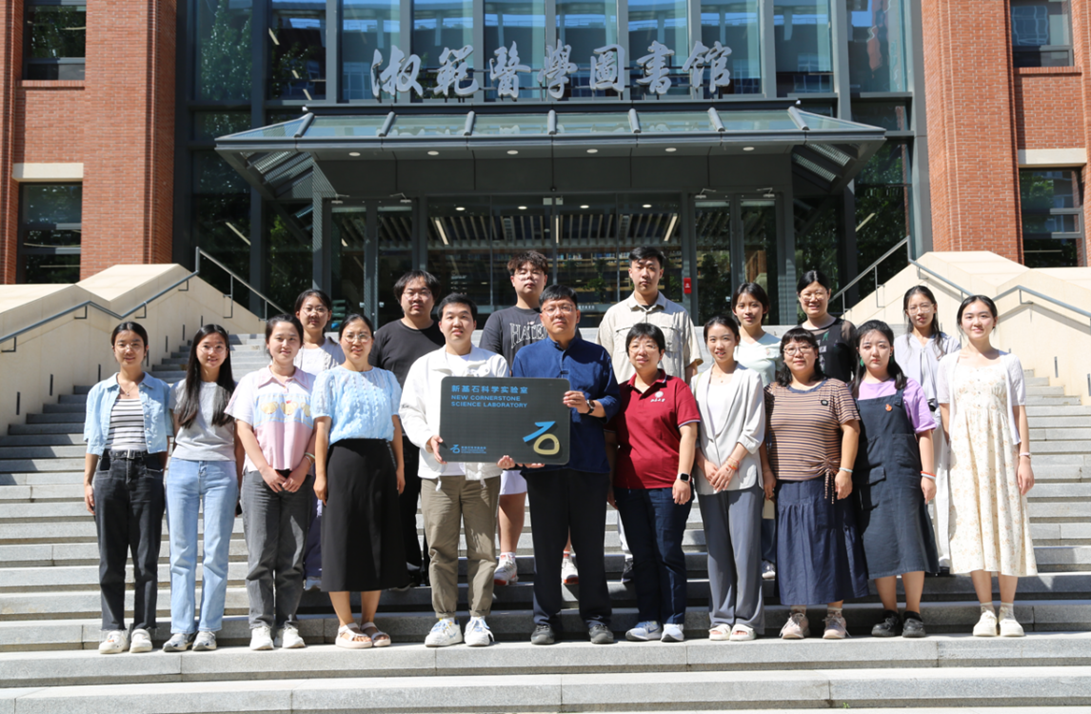
Lu Tie, Associate Professor
Yang Liu, Lecturer
Juxiang Ye, Lecturer
Yingli Jia, Senior Technician
Postdoctoral Fellows: Jiale Wang, Shuhua Zhou, Fei Teng
Students: Jinhui Ding, Kui Cai, Jingyu Rui, Yihe Xie, Wanping Zhuang, Yunan Sun, Yanjun Liu, Xiaojing Jiang, Zili Liu, Haoyu Zhou, Jincheng Fu, Yuqi Huang
4.Selected Publications (Corresponding Author)
Xiao-Yan Ge, Jie Cheng, Li-Jun Zhang, Lu-Lu Guo, Rui Xiang, Yan Lu, Shang-Lei Ning, Kai-Yu Wang, Kong-Kai Zhu, Ming-Xin Gao, Yue Li, Yu-Song Zhang, Nai-Kang Rong, Xiang Han, Ming-Hui Zhang, Le Fang, Yun-Fei Xu, Su-Wen Zhao, Qian Li, Fan Yang, Yong Hao#, Ren-Jie Chai#, Xiao Yu#, Ji-Chun Yang#, and Jin-Peng Sun#. Identification of Or5v1/Olfr110 as an oxylipin receptor and anti-obesity target. Cell. 2026 Jan 21:S0092-8674(25)01429-1. 最后通讯作者。
Xiang Han, Ming-Hui Zhang, Nai-Kang Rong, Kong-Kai Zhu, Yuan Pei, Xiao-Yan Ge, Qi Liu, Huan Lu, Jing Liu, Li-Jun Zhang, Hong-Qiang Bao, Jia-Hao Pi, Lei Fan, Yu Fu, Xu-Hang Shao, Wen-Qi Yan, Xi-He Gao, Ming-Yue Zhang, Lu-Lu Guo, Yan Lu, Shang-Lei Ning, Hua Zhang, Yun-Fei Xu, Xiao-Ya Feng, Jie Cheng, Ming Xia#, Qian Li#, Xiao Yu#, Fan Yang#, and Jin-Peng Sun#. Mechanistic insights into fatty acid odor detection mediated by class II olfactory receptors. Cell. 2026 Jan 21:S0092-8674(25)01431-X. 最后通讯作者。
3. Jia-Le Wang, Xue-Ying Sha, Yue Shao, Zi-Hao Zhang, Shen-Ming Huang, Hui Lin, Shi-Yi Gan, Nan Zhang, Xin-Yi Xia, Yu-Nan Sun, Jin-Hui Ding, Rui-Qi Zhao, Jie Cheng, Pan Shang, Jin-Peng Wang, Yan-Jun Liu, Fan Yang, Peng Xiao, Lu-Wen Wang, Dong-Yu Zhao, Yi Tang, Lu Tie, Yang Du, Yong Zhang, Ju-Fang He, and Jin-Peng Sun#. Elucidating pathway-selective biased CCKBR agonism for Alzheimer's disease treatment. Cell. 2026 Jan 22;189(2):640-658.e22. 最后通讯作者。
4. Wen-Qin Xiao, Yan Zhu, Xin-Jie Tang, Kong-Kai Zhu, Wei-Feng Zhang, Meng-Ting Chen, Kui Cai, San Xu, Zheng Wu, Mei Wang, Jia-Yi Liu, Ling-Long Long, Zi-Xin Tan, Ai-Ke Wu, Song-Qi Zhou, Zhi-Xiang Zhao, Yan Tang, Ying-Xue Huang, Ben Wang, Fang-Fen Liu, Qian Wang, Fan Yang, Dan Jian, Wei Shi, Hong-Fu Xie, Xiang Chen, Lu-Lu Guo#, Zhi-Li Deng#, Jin-Peng Sun#, and Ji Li#, Metabolite-gated vascular contractility switch: OXGR1 activation mechanism enables agonist therapy for rosacea erythema, Cell. 2026. 通讯作者,倒数第二位。
5.Preston J. Anderson, Peng Xiao#, Ya-Ni Zhong, Adam N. Kaakati, Juliana Alfonso-DeSouza, Alejandra Patino, Andrew Ahn, Chanpreet Jassal, Tianyao Zhang, Chao Zhang, Kexin Yu, Lei Qi, Wei Ding, Samuel Liu, Biswaranjan Pani, Athmika Krishnan, Oscar Chen, Joseph Strawn, Joshua C. Snyder, Jin-Peng Sun#, Sudarshan Rajagopa#. Nature. 2026 May 27. doi: 10.1038/s41586-026-10539-y. 通讯作者,倒数第二位。
6.Jin-Peng Sun#, Peng Xiao, Ines Liebscher#. The therapeutic potential of orphan adhesion G-protein-coupled receptors. Nat Rev Drug Discov. 2026 Jun;25(6):423-447. doi: 10.1038/s41573-025-01371-6.共同通讯作者
7. Zhao Yang, Yu-Qi Ping, Ming-Wei Wang, Chao Zhang, Shu-Hua Zhou, Yue-Tong Xi, Kong-Kai Zhu, Wei Ding, Qi-Yue Zhang, Zhi-Chen Song, Ru-Jia Zhao, Zi-Lu He, Meng-Xin Wang, Lei Qi, Christian Ullmann, Albert Ricken, Torsten Schöneberg, Zhen-Ji Gan, Xiao Yu#, Peng Xiao#, Fan Yi#, Ines Liebscher#, and Jin-Peng Sun#. Identification, structure, and agonist design of an androgen membrane receptor. Cell. 2025 Mar 20;188(6):1589-1604.e24. 最后通讯作者,引用2次。
8. Hui Lin, Chuanshun Ma, Kui Cai, Lulu Guo, Xuemei Wang, Lin Lv, Chao Zhang, Jun Lin, Daolai Zhang, Chuan Ye, Tengwei Wang, Shenming Huang, Jifei Han, Zihao Zhang, Junyan Gao, Mingxiang Zhang, Zhao Pu, Fengyang Li, Yongyuan Guo, Xiaojun Zhou, Chengxue Qin, Fan Yi, Xiao Yu#, Wei Kong#, Changtao Jiang#,Jin-Peng Sun#. Metabolic signaling of ceramides through the FPR2 receptor inhibits adipocyte thermogenesis. Science. 2025 May;388(6746):eado4188.最后通讯作者。
9. Siting Zhang, Hui Lin, Jiale Wang, Jingyu Rui, Tengwei Wang, Zeyu Cai, Shenming Huang, Yanxiang Gao, Tianfeng Ma, Rui Fan, Rongbo Dai, Zhiqing Li, Yiting Jia, Qiang Chen, HaoMing He, Jiaai Tan, Shirong Zhu, Rui Gu, Zhigang Dong, Meihong Li, Enmin Xie, Yi Fu, Jingang Zheng#, Changtao Jiang#, Jinpeng Sun# & Wei Kong#. Sensing ceramides by CYSLTR2 and P2RY6 to aggravate atherosclerosis. Nature. 2025 May;641(8062):476-485. 共同通讯作者,倒数第二位。引用 1次。
10. Chunyou Mao, Peng Xiao, Xiao-Na Tao, Jiao Qin, Qing-Tao He, Chao Zhang, Sheng-Chao Guo, Ya-Qin Du, Li-Nan Chen, Dan-Dan Shen, Zhi-Shuai Yang, Han-Qiong Zhang, Shen-Ming Huang, Yong-Hao He, Jie Cheng, Ya-Ni Zhong, Pan Shang, Jun Chen, Dao-Lai Zhang, Qian-Lang Wang, Mei-Xia Liu, Guo-Yu Li, Yongyuan Guo, H. Eric Xu, Chuanxin Wang, Cheng Zhang, Shiqing Feng#, Xiao Yu#, Yan Zhang#, Jin-Peng Sun#. Unsaturated bond recognition leads to biased signal in a fatty acid receptor. Science. 2023 Apr 7;380(6640):eadd6220. 最后通讯作者,封面文章,高被引论文;引用65次。
11. Yu-Qi Ping, Chunyou Mao, Peng Xiao, Ru-Jia Zhao, Yi Jiang, Zhao Yang, Wen-Tao An, Dan-Dan Shen, Fan Yang, Huibing Zhang, Changxiu Qu, Qingya Shen, Caiping Tian, Zi-jian Li, Shaolong Li, Guang-Yu Wang, Xiaona Tao, Xin Wen, Ya-Ni Zhong, Jing Yang, Fan Yi, Xiao Yu, H. Eric Xu#, Yan Zhang& Jin-Peng Sun#. Structures of the glucocorticoid-bound adhesion receptor GPR97-Go complex. Nature. 2021 Jan;589(7843):620-626. 最后通讯作者,高被引论文(2022),引用111次。
12. Lulu Guo, Jie Cheng, Shuo Lian, Qun Liu, Yan Lu, Yuan Zheng, Kongkai Zhu, Minghui Zhang, Yalei Kong, Chao Zhang, Naikang Rong, Yuming Zhuang, Guoxing Fang, Jingjing Jiang, Tianyao Zhang, Xiang Han, Zili Liu, Ming Xia, Shangming Liu, Lei Zhang, Stephen D. Liberles, Xiao Yu, Yunfei Xu#, Fan Yang#, Qian Li# & Jin-Peng Sun#. Structural basis of amine odorant perception by a mammal olfactory receptor. Nature. 2023 Jun;618(7963):193-200. 最后通讯作者,引用 36次。
13. Fan Yang, Lulu Guo, Yu Li, Guopeng Wang, Jia Wang, Chao Zhang, Guo-Xing Fang, Xu Chen, Lei Liu, Xu Yan, Qun Liu, Changxiu Qu, Yunfei Xu, Peng Xiao, Zhongliang Zhu, Zijian Li, Jiuyao Zhou, Xiao Yu, Ning Gao# & Jin-Peng Sun#. Structure, function and pharmacology of human itch receptor complexes. Nature. 2021 Dec;600(7887):164-169. 最后通讯作者,获Nature Chemical Biology专题评述,引用93次。
14. Pan Shang, Naikang Rong, Jing-Jing Jiang, Jie Cheng, Ming-Hui Zhang, Dongwei Kang, Lei Qi, Lulu Guo, Gong-Ming Yang, Qun Liu, Zhenzhen Zhou, Xiao-Bing Li, Kong-Kai Zhu, Qing-Biao Meng, Xiang Han, Wenqi Yan, Yalei Kong, Lejin Yang, Xiaohui Wang, Dapeng Lei, Xin Feng, Xinyong Liu, Xiao Yu, Yue Wang#, Qian Li#, Zhen-Hua Shao#, Fan Yang#, and Jin-Peng Sun#. Structural and signaling mechanisms of TAAR1 enabled preferential agonist design. Cell. 2023 Nov 22;186(24):5347-5362.e24. 最后通讯作者,引用16次。
15. Xin Wen, Pan Shang, Haidi Chen, Lulu Guo, Naikang Rong, Xiaoyu Jiang, Xuan Li, Junyan Liu, Gongming Yang, Jiacheng Zhang, Kongkai Zhu, Qingbiao Meng, Xuefei He, Zhihai Wang, Zili Liu, Haoran Cheng, Yilin Zheng, Bifei Zhang, Jiaojiao Pang, Zhaoqian Liu, Peng Xiao, Yuguo Chen, Lunxu Liu, Fengming Luo, Xiao Yu, Fan Yi#, Pengju Zhang#, Fan Yang #, Cheng Deng#, and Jin-Peng Sun#. Evolutionary study and structural basis of proton sensing by Mus GPR4 and Xenopus GPR4. Cell. 2025 Feb 6;188(3):653-670.e24. 最后通讯作者,获Mol Cell杂志专题评论,引用3次。
16. Yu-Qi Ping, Peng Xiao, Fan Yang, Ru-Jia Zhao, Sheng-Chao Guo, Xu Yan, Xiang Wu, Chao Zhang, Yan Lu, Fenghui Zhao, Fulai Zhou, Yue-Tong Xi, Wanchao Yin, Feng-Zhen Liu, Dong-Fang He, Dao-Lai Zhang, Zhong-Liang Zhu, Yi Jiang, Lutao Du, Shi-Qing Feng, Torsten Schöneberg, Ines Liebscher#, H. Eric Xu# & Jin-Peng Sun#. Structural basis for the tethered peptide activation of adhesion GPCRs.Nature. 2022 Apr;604(7907):763-770. 最后通讯作者,高被引论文,Nature配发同期评述,引用68次。
17. Peng Xiao, Shengchao Guo, Xin Wen, Qing-Tao He, Hui Lin, Shen-Ming Huang, Lu Gou, Chao Zhang, Zhao Yang, Ya-Ni Zhong, Chuan-Cheng Yang, Yu Li, Zheng Gong, Xiao-Na Tao, Zhi-Shuai Yang, Yan Lu, Shao-Long Li, Jun-Yan He, Chuanxin Wang, Lei Zhang#, Liangliang Kong#, Jin-Peng Sun#, Xiao Yu#. Tethered peptide activation mechanism of the adhesion GPCRs ADGRG2 and ADGRG4. Nature. 2022 Apr;604(7907):771-778. 共同通讯作者,倒数第二位。高被引论文,引用78次。
18. Jun Lin, Qixing Nie, Jie Cheng, Ya-Ni Zhong, Tianyao Zhang, Xiuying Zhang, Xiaoyan Ge, Yong Ding, Canyang Niu, Yuhua Gao, Kai Wang, Mingxin Gao, Xuemei Wang, Weixuan Chen, Chuyu Yun, Chuan Ye, Jinkun Xu, Weike Shaoyong, Lijun Zhang, Pan Shang, Xi Luo, Zhiwei Zhang, Xin Zheng, Xueying Sha, Jinxin Zhang, Shaoping Nie, Xuguang Zhang, Fazheng Ren, Huiying Liu, Erdan Dong, Xiao Yu#, Linong Ji#, Yanli Pang#, Jin-Peng Sun#, and Changtao Jiang#. A microbial amino-acid-conjugated bile acid, tryptophan-cholic acid, improves glucose homeostasis via the orphan receptor MRGPRE. Cell. 2025 10.1016/j.cell.2025.05.010. 共同通讯作者,倒数第二。
19. Zheng Xu, Lulu Guo, Jingjing Yu, Siyuan Shen, Chao Wu, Weifeng Zhang, Chang Zhao, Yue Deng, Xiaowen Tian, Yuying Feng, Hanlin Hou, Lantian Su, Hongshuang Wang, Shuo Guo, Heli Wang, Kexin Wang, Peipei Chen, Jie Zhao, Xiaoyu Zhang, Xihao Yong, Lin Cheng, Lunxu Liu, Shengyong Yang, Fan Yang, Xiaohui Wang, Xiao Yu#, Yunfei Xu#, Jin-Peng Sun#, Wei Yan#, Zhenhua Shao#. Ligand recognition and G-protein coupling of trace amine receptor TAAR1. Nature. 2023 Dec;624(7992):672-681.共同通讯作者,倒数第三位。Nature配发同期评述,引用26次。
20. Fan Yang, Chunyou Mao, Lulu Guo, Jingyu Lin, Qianqian Ming, Peng Xiao, Xiang Wu, Qingya Shen, Shimeng Guo, Dan-Dan Shen, Ruirui Lu, Linqi Zhang, Shenming Huang, Yuqi Ping, Chenlu Zhang, Cheng Ma, Kai Zhang, Xiaoying Liang, Yuemao Shen, Fajun Nan, Fan Yi, Vincent C. Luca, Jiuyao Zhou, Changtao Jiang, Jin-Peng Sun#, Xin Xie#, Xiao Yu# & Yan Zhang#. Structural basis of GPBAR activation and bile acid recognition. Nature. 2020 Nov;587(7834):499-504.共同通讯作者,倒数第4位。引用121次。
21. Xiaolong Hu, Weizhen Ao, Mingxin Gao, Lijie Wu, Yuan Pei, Shenhui Liu, Yiran Wu, Fei Zhao, Qianqian Sun, Junlin Liu, Longquan Jiang, Xin Wang, Yan Li, Qiwen Tan, Jie Cheng, Fan Yang, Chi Yang#, Jinpeng Sun#, Tian Hua#, Zhi-Jie Liu#. Bitter taste TAS2R14 activation by intracellular tastants and cholesterol. Nature. 2024 Jul;631(8020):459-466. 共同通讯作者,倒数第三。引用18次。。
22. Peng Xiao, Wei Yan, Lu Gou, Ya-Ni Zhong, Liangliang Kong, Chao Wu, Xin Wen, Yuan Yuan, Sheng Cao, Changxiu Qu, Xin Yang, Chuan-Cheng Yang, Anjie Xia, Zhenquan Hu, Qianqian Zhang, Yong-Hao He, Dao-Lai Zhang, Chao Zhang, Gui-Hua Hou, Huanxiang Liu, Lizhe Zhu, Ping Fu, Shengyong Yang, Daniel M Rosenbaum, Jin-Peng Sun#, Yang Du#, Lei Zhang#, Xiao Yu#, Zhenhua Shao#. Ligand recognition and allosteric regulation of DRD1-Gs signaling complexes. Cell. 2021 Feb 18;184(4):943-956.e18. 共同通讯作者,倒数第5位。封面文章。引用98次。
23. Jie Cheng, Zhao Yang, Xiao-Yan Ge, Ming-Xin Gao, Ran Meng, Xin Xu, Yu-Qi Zhang, Rui-Zhe Li, Jing-Yu Lin, Zhao-Mei Tian, Jin Wang, Shang-Lei Ning, Yun-Fei Xu, Fan Yang, Jing-Kai Gu, Jin-Peng Sun#, Xiao Yu#. Autonomous sensing of the insulin peptide by an olfactory G protein-coupled receptor modulates glucose metabolism. Cell Metabolism. 2022 Feb 1;34(2):240-255. 共同通讯作者,倒数第二位。引用44次。
24. Ting Zhou, Jie Cheng, Shuo He, Chao Zhang, Ming-Xin Gao, Li-Jun Zhang, Jin-Peng Sun#, Yi Zhu#, Ding Ai#. The sphingosine-1-phosphate receptor 1 mediates the atheroprotective effect of eicosapentaenoic acid. Nature Metabolism. 2024 Aug;6(8):1566-1583. 共同通讯作者,倒数第三。引用3次。
25. Jia-Le Wang, Xiao-Dong Dou, Jie Cheng, Ming-Xin Gao, Guo-Feng Xu, Wei Ding, Jin-Hui Ding, Yu Li, Si-Han Wang, Zhao-Wei Ji, Xin-Yi Zhao, Tong-Yu Huo, Cai-Fang Zhang, Ya-Meng Liu, Xue-Ying Sha, Jia-Rui Gao, Wen-Hui Zhang, Yong Hao, Cheng Zhang, Jin-Peng Sun#, Ning Jiao#, Xiao Yu#. Functional screening and rational design of compounds targeting GPR132 to treat diabetes. Nature Metabolism. 2023 Oct;5(10):1726-1746. 共同通讯作者,倒数第三。引用14次。
26. Jin-Peng Sun#, Peng Xiao, Ines Liebscher#. The therapeutic potential of orphan adhesion G-protein-coupled receptors. Nature reviews. Drug discovery, 2026, Advance online publication. 第一兼通讯作者。引用0次。
27. Fan Yang, Peng Xiao, Chang-xiu Qu, Qi Liu, Liu-yang Wang, Zhi-xin Liu, Qing-tao He, Chuan Liu, Jian-ye Xu, Rui-rui Li, Meng-jing Li, Qing Li, Xu-zhen Guo, Zhao-ya Yang, Dong-fang He, Fan Yi, Ke Ruan, Yue-mao Shen, Xiao Yu, Jin-Peng Sun# and Jiangyun Wang#. Allosteric mechanisms underlie GPCR signaling to SH3-domain proteins through arrestin. Nature Chemical Biology. 2018 Sep;14(9):876-886. 共同通讯作者,倒数第二位。引用51次。
28. Yuan Zheng, Dan Jiang, Yan Lu, Chao Zhang, Shen-Ming Huang, Haocheng Lin, Daolai Zhang, Shengchao Guo, Jifei Han, Jun Chen, Yaxuan He, Mingxiang Zhang, Yanhui Gao, Yongyuan Guo, Ran Wei, Ming Xia, Yingying Qin, Zhaoqian Liu, Fan Yang, Shaohua Ge, Fan Yi, Xiao Yu#, Hui Lin#, Peng Xiao#, Jin-Peng Sun#& Shiqing Feng#. Development of an allosteric adhesion GPCR nanobody with therapeutic potential. Nature Chemical Biology. 2025. https://doi.org/10.1038/ s41589-025-01896-2. 共同通讯作者,倒数第二位。
29. Lulu Guo, Kongkai Zhu, Ya-Ni Zhong, Mingxin Gao, Junyan Liu, Zhimin Qi, Zili Liu, Naikang Rong, Minghui Zhang, Dongfang Li, Qiyue Zhang, Gongming Yang, Xinxin Zhang, Mingyue Zhang, Ning Ding, Yu-qi Ping, Zhao Yang, Peng Xiao, Ming Xia#, Xiao Yu#, Alatan Gaole#, Jin-Peng Sun#, and Fan Yang#. Structural basis and biased signaling of proton sensation by GPCRs mediated by extracellular histidine rearrangement. Molecular Cell. 2025 Apr 17;85(8):1658-1673.e7. 共同通讯作者,倒数第二,引用1次,Molecular Cell配发同期评述。
30. Chunyou Mao, Ru-Jia Zhao, Ying-Jun Dong, Mingxin Gao, Li-Nan Chen, Chao Zhang, Peng Xiao, Jia Guo, Jiao Qin, Dan-Dan Shen, Su-Yu Ji, Shao-Kun Zang, Huibing Zhang, Wei-Wei Wang, Qingya Shen, Jin-Peng Sun#, and Yan Zhang#. Conformational transitions and activation of the adhesion receptor CD97. Molecular Cell. 2024 Feb 1;84(3):570-583.e7. 共同通讯作者,倒数第二位置。引用5次。
31. Zhao Yang, Shu-Hua Zhou, Qi-Yue Zhang, Zhi-Chen Song, Wen-Wen Liu, Yu Sun, Ming-Wei Wang, Xiao-Long Fu, Kong-Kai Zhu, Ying Guan, Jie-Yu Qi, Xiao-Hui Wang, Yu-Nan Sun, Yan Lu, Yu-Qi Ping, Yue-Tong Xi, Zhen-Xiao Teng, Lei Xu, Peng Xiao, Zhi-Gang Xu, Wei Xiong, Wei Qin, Wei Yang#, Fan Yi#, Ren-Jie Chai#, Xiao Yu#, Jin-Peng Sun#. A force-sensitive adhesion GPCR is required for equilibrioception. Cell Research. 2025 Apr;35(4):243-264. 最后通讯作者,引用2次,获同期Cell Research专题评论。
32. Yi Fu, Yaqian Huang, Zhao Yang, Yufei Chen, Jingang Zheng, Chenfeng Mao, Zhiqing Li, Zhixin Liu, Bing Yu, Tuoyi Li, Meili Wang, Chanjuan Xu, Yiwei Zhou, Guizhen Zhao, Yiting Jia, Wei Guo, Xin Jia, Tao Zhang, Li Li, Ziyi Liu, Shengchao Guo, Mingliang Ma, Heng Zhang, Bo Liu, Junbao Du, Wengong Wang, Chaoshu Tang, Pei Gao, Qingbo Xu, Xian Wang, Jianfeng Liu, Jinpeng Sun# and Wei Kong#. Cartilage oligomeric matrix protein is an endogenous β-arrestin-2-selective allosteric modulator of AT1 receptor counteracting vascular injury. Cell Research. 2021 Jul;31(7):773-790. 共同通讯作者,倒数第二位,引用43次。
33. Hong-Mei Wang, Yun-Fei Xu, Shang-Lei Ning, Du-Xiao Yang, Yi Li, Yu-Jie Du, Fan Yang, Ya Zhang, Nan Liang, Wei Yao, Ling-Li Zhang, Li-Chuan Gu, Cheng-Jiang Gao, Qi Pang, Yu-Xin Chen, Kun-Hong Xiao, Rong Ma, Xiao Yu#, Jin-Peng Sun#. The catalytic region and PEST domain of PTPN18 distinctly regulate the HER2 phosphorylation and ubiquitination barcodes. Cell Research. 2014 Sep;24(9):1067-90. 最后通讯作者,引用75次。
34. Yufei Chen, Chenfeng Mao, Rui Gu, Rujia Zhao, Weihao Li, Zihan Ma, Yiting Jia, Fang Yu, Jian Luo, Yi Fu, Jinpeng Sun#, Wei Kong#. Nidogen-2 is a Novel Endogenous Ligand of LGR4 to Inhibit Vascular Calcification. Circulation Research. 2022 Dec 2;131(12):1037-1054. 共同通讯作者,倒数第二位。
35. Qingqing Chu, Yujia Li, Jichao Wu, Yanjiao Gao, Xiangyun Guo, Jing Li, Hang Lv, Min Liu, Wei Tang, Peng Zhan, Tao Zhang, Huili Hu, Hong Liu, Jinpeng Sun#, Xiaojie Wang#, Fan Yi#. Oxysterol Sensing Through GPR183 Triggers Endothelial Senescence in Hypertension. Circulation Research. 2024 Sep 13;135(7):708-721. 共同通讯作者,倒数第三位。引用3次。
36. Lin-Qi Zhang, Chang-Xiao Che, Ya-Qin Du, Lu-lu Han, Jia-le Wang, Chen-Yu Zhang, Shen-Ming Huang, Zhong-Yuan Zheng, Qing-Tao He, Zhao Yang, Long Zhang, Nan Chen, Fan Yang, Ying-Li Jia, Shi-Min Zhao, De-min Zhou, Chu Wang, Xian Wang, Jin-Peng Sun#, Lu Tie#. N-homocysteinylation of β-arrestins biases GPCR signaling and promotes platelet activation. Blood. 2025 May 15;145(20):2374-2389. 共同通讯作者,倒数第二位。
37. Jun-Hong Dong, Yi-Jing Wang, Min Cui, Xiao-Jing Wang, Wen-Shuai Zheng, Ming-Liang Ma, Fan Yang, Dong-Fang He, Qiao-Xia Hu, Dao-Lai Zhang, Shang-Lei Ning, Chun-Hua Liu, Chuan Wang, Yue Wang, Xiang-Yao Li, Fan Yi, Amy Lin, Alem W. Kahsai, Thomas Joseph Cahill Ⅲ, Zhe-Yu Chen, Xiao Yu, and Jin-Peng Sun#. Adaptive activation of a stress response pathway improves learning and memory through Gs and β-arrestin-1-regulated lactate metabolism. Biological Psychiatry. 2017 Apr 15;81(8):654-670. 独立通讯作者,引用42次,封面文章。
38. Wentao An, Hui Lin, Lijuan Ma, Chao Zhang, Yuan Zheng, Qiuxia Cheng, Chuanshun Ma, Xiang Wu, Zihao Zhang, Yani Zhong, Menghui Wang, Dongfang He, Zhao Yang, Lutao Du, Shiqing Feng, Chuanxin Wang, Fan Yang, Peng Xiao#, Pengju Zhang#, Xiao Yu#, and Jin-Peng Sun#. Progesterone activates GPR126 to promote breast cancer development via the Gi pathway. Proceedings of the National Academy of Sciences of the United States of America. 2022 Apr 12;119(15):e2117004119. 最后通讯作者,引用29次。
39. Ming-Wei Wang, Zhao Yang, Xu Chen, Shu-Hua Zhou, Ge-Lin Huang, Jian-Ning Sun, Hui Jiang, Wen-Ming Xu#, Hao-Cheng Lin#, Xiao Yu#, Jin-Peng Sun#. Activation of PTH1R alleviates epididymitis and orchitis through Gq and β-arrestin-1 pathways. Proceedings of the National Academy of Sciences of the United States of America. 2021 Nov 9;118(45):e2107363118. 最后通讯作者,引用11次。
40. Changxiu Qu, Ji Young Park, Min Woo Yun, Qing-tao He, Fan Yang, Kiae Kim, Donghee Ham, Rui-rui Li, T. M. Iverson, Vsevolod V. Gurevich, Jin-Peng Sun#, and Ka Young Chung#. Scaffolding mechanism of arrestin-2 in the cRaf/MEK1/ERK signaling cascade. Proceedings of the National Academy of Sciences of the United States of America. 2021 Sep 14;118(37):e2026491118. 共同通讯作者,倒数第二位。引用36次。
41. Lijuan Ma, Fan Yang, Xiang Wu, Chunyou Mao, Lulu Guo, Tianshu Miao, Shao-Kun Zang, Xiaoyu Jiang, Dan-Dan Shen, Tianhui Wei, Hengxing Zhou, Qin Wei, Shiyang Li, Qiang Shu, Shiqing Feng, Changtao Jiang, Bo Chu, Lutao Du#, Jin-Peng Sun#, Xiao Yu#, Yan Zhang#, and Pengju Zhang#.Structural basis and molecular mechanism of biased GPBAR signaling in regulating NSCLC cell growth via YAP activity. Proceedings of the National Academy of Sciences of the United States of America. 2022 Jul 19;119(29):e2117054119. 共同通讯作者,倒数第4位。引用17次。
42. Chun-Hua Liu, Zheng Gong , Zong-Lai Liang , Zhi-Xin Liu , Fan Yang , Yu-Jing Sun , Ming-Liang Ma , Yi-Jing Wang , Chao-Ran Ji , Yu-Hong Wang , Mei-Jie Wang , Fu-Ai Cui , Amy Lin , Wen-Shuai Zheng , Dong-Fang He, Chang-xiu Qu, Peng Xiao, Chuan-Yong Liu, Alex R.B. Thomsen, Thomas Joseph Cahill III , Alem W Kahsai, Fan Yi, Kun-Hong Xiao, Tian Xue, Zhuan Zhou, Xiao Yu, Jin-Peng Sun#. Arrestin-biased AT1R agonism induces acute catecholamine secretion through TRPC3 coupling. Nature Communications. 2017 Feb 9:8:14335. 独立通讯作者,引用86次。文章获得专题评述。
43. Qi Liu, Qing-tao He, Xiaoxuan Lyu, Fan Yang, Zhong-liang Zhu, Peng Xiao, Zhao Yang, Feng Zhang, Zhao-ya Yang, Xiao-yan Wang, Peng Sun, Qian-wen Wang, Chang-xiu Qu, Zheng Gong, Jing-yu Lin, Zhen Xu, Shao-le Song, Shen-ming Huang, Sheng-chao Guo, Ming-jie Han, Kong-kai Zhu, Xin Chen, Alem W. Kahsai, Kun-Hong Xiao, Wei Kong, Fa-hui Li, Ke Ruan, Zi-jian Li, Xiao Yu, Xiao-gang Niu, Chang-wen Jin, Jiangyun Wang# & Jin-peng Sun#. DeSiphering receptor core-induced and ligand-dependent conformational changes in arrestin via genetic encoded trimethylsilyl 1H-NMR probe. Nature Communications. 2020 Sep 25;11(1):4857. 最后通讯作者,引用33次。
44. Shaoyong Lu#, Xinheng He, Zhao Yang, Zongtao Chai, Shuhua Zhou, Junyan Wang, Ashfaq Ur Rehman, Duan Ni, Jun Pu, Jinpeng Sun#, Jian Zhang#. Activation pathway of a G protein-coupled receptor uncovers conformational intermediates as targets for allosteric drug design. Nature communications. 2021 Aug 5;12(1):4721.共同通讯作者,倒数第二位。引用140次,高被引论文。
45. Qing-Tao He, Peng Xiao, Shen-Ming Huang, Ying-Li Jia, Zhong-Liang Zhu, Jing-Yu Lin, Fan Yang, Xiao-Na Tao, Ru-Jia Zhao, Feng-Yuan Gao, Xiao-Gang Niu, Kun-Hong Xiao, Jiangyun Wang#, Changwen Jin#, Jin-Peng Sun#, Xiao Yu#. Structural studies of phosphorylation-dependent interactions between the V2R receptor and arrestin-2. Nature communications. 2021 Apr 22;12(1):2396.共同通讯作者,倒数第二位。引用45次。
46. Tuoyi Li, Bing Yu, Zhixin Liu, Jingyuan Li, Mingliang Ma, Yingbao Wang, Mingjiang Zhu, Huiyong Yin, Xiaofeng Wang, Yi Fu, Fang Yu, Xian Wang, Xiaohong Fang, Jinpeng Sun#, Wei Kong#. Homocysteine directly interacts and activates the angiotensin II type I receptor to aggravate vascular injury. Nature Communications. 2018 Jan 2;9(1):11. 共同通讯作者,倒数第二位。引用174次。
47. Xuan Zhang, Guibing Liu, Ya-Ni Zhong, Ru Zhang, Chuan-Cheng Yang, Canyang Niu, Xuanyu Pu, Jingjing Sun, Tianyao Zhang, Lejin Yang, Chao Zhang, Xiu Li, Xinyuan Shen, Peng Xiao#, Jin-Peng Sun#, Weimin Gong#. Structural basis of ligand recognition and activation of the histamine receptor family. Nature Communications. 2024 Sep 27;15(1):8296. 共同通讯作者,倒数第二位。引用2次。
48. Shen-Ming Huang, Zhi-Zhen Huang, Lei Liu, Meng-Yao Xiong, Chao Zhang, Bo-Yang Cai, Ming-Wei Wang, Kui Cai, Ying-Li Jia, Jia-Le Wang, Ming-Hui Zhang, Yi-He Xie, Min Li, Hang Zhang, Cheng-Hao Weng, Xin Wen, Zhi Li, Ying Sun, Fan Yi, Zhao Yang, Peng Xiao, Fan Yang, Xiao Yu, Lu Tie#, Bao-Xue Yang# & Jin-Peng Sun#.Structural insights into the mechanisms of urea permeation and distinct inhibition modes of urea transporters. Nature Communications.2024 Nov 26;15(1):10226. 最后通讯作者。
49. Changxiu Qu, Chunyou Mao, Peng Xiao, Qingya Shen, Ya-Ni Zhong, Fan Yang, Dan-Dan Shen, Xiaona Tao, Huibing Zhang, Xu Yan, Ru-Jia Zhao, Junyan He, Ying Guan, Chao Zhang, Guihua Hou, Peng-Ju Zhang, Guige Hou, Zijian Li, Xiao Yu, Ren-Jie Chai#, You-Fei Guan, Jin-Peng Sun#, Yan Zhang#. Ligand recognition, unconventional activation and G protein coupling of the prostaglandin E2 receptor 2 EP2 subtype. Science Advances. 2021 Apr 2;7(14):eabf1268. 共同通讯作者,倒数第二位。引用35次。
50. Yujia Li, Yiqi Duan, Qingqing Chu, Hang Lv, Jing Li, Xiangyun Guo, Yanjiao Gao, Min Liu, Wei Tang, Huili Hu, Hong Liu, Jinpeng Sun#, Xiaojie Wang# and Fan Yi#. G-protein coupled receptor GPR124 protects against podocyte senescence and injury in diabetic kidney disease. Kidney Int. 2025 Apr;107(4):652-665.共同通讯作者,倒数第三位。本文获杂志同期评述。
51. Zhao Yang, Jie Cheng, Pan Shang, Jin-Peng Sun#, Xiao Yu#. Emerging roles of olfactory receptors in glucose metabolism. Trends in Cell Biology. 2023 Jun;33(6):463-476. 共同通讯作者,倒数第二位。引用12次。
52. Shenming Huang, Peng Xiao, Jin-Peng Sun#. Structural basis of signaling of cannabinoids receptors: paving a way for rational drug design in controling mutiple neurological and immune diseases. Signal Transduction and Targeted Therapy. 2020 Jul 21;5(1):127. 最后通讯作者,引用7次。
53. Shu-Hua Zhou, Ming-Wei Wang, Zhi-Chen Song, Zhao Yang, Kong-Kai Zhu, Xin Wen, Qi-Yue Zhang, Ying Guan, Jia-Rui Gao, Xiao-Hui Wang, Ya-Qi Wang, Wen-Wen Liu, Lei Xu, Wei Xiong, Ren-Jie Chai#, Chuan Wang#, Zhi-Gang Xu#, Xiao Yu#, and Jin-Peng Sun#. The force-sensing GPCR LPHN2 is indispensable for normal auditory function. Cell reports, 2025, 44(11), 116519. 最后通讯作者,引用1次
54. Hui Li , Fan Yang , Chunhua Liu, Peng Xiao , Yunfei Xu , Zonglai Liang , Chuan Liu , Hongmei Wang , Wenjun Wang , Wenshuai Zheng , Wei Zhang , Xiaoyun Ma , Dongfang He , Xiaoyuan Song , Fuai Cui , Zhigang Xu , Fan Yi , Jin-Peng Sun# , and Xiao Yu#. Crystal structure and substrate specificity of PTPN12. Cell Reports. 2016 May 10;15(6):1345-58. 共同通讯作者,倒数第二位。引用33次。
55. Xiu Li, Xuan Zhang#, Xin Wen, Daolai Zhang, Changxiu Qu, Xinyi Miao, Wenkai Zhang, Ru Zhang, Guibing Liu, Peng Xiao#, Jin-Peng Sun#, Weimin Gong#. Structural basis for ligand recognition and activation of the prostanoid receptors. Cell Reports. 2024 Mar 26;43(3):113893. 共同通讯作者,倒数第二位。引用1次。
56. Ying Guan, Hai-Bo Du, Zhao Yang, Yu-Zhu Wang, Rui Ren, Wen-Wen Liu, Chao Zhang, Jia-Hai Zhang, Wen-Tao An, Na-Na Li, Xiao-Xue Zeng, Jie Li, Yi-Xiao Sun, Yan-Fei Wang, Fan Yang, Jun Yang, Wei Xiong, Xiao Yu, Ren-Jie Chai, Xiao-Ming Tu#, Jin-Peng Sun#, and Zhi-Gang Xu#. Deafness-Associated ADGRV1 Mutation Impairs USH2A Stability through Improper Phosphorylation of WHRN and WDSUB1 Recruitment. Advanced Science. 2023 Jun;10(16):e2205993.共同通讯作者,倒数第二位。引用6次。
57. Qing-Ya Shen, Xin-Yan Tang, Xin Wen, Shi-Zhuo Cheng, Peng Xiao, Shao-Kun Zang, Dan-Dan Shen, Lei Jiang, Yanrong Zheng, Huibing Zhang, Haomang Xu, Chunyou Mao, Min Zhang#, We-Wei Hu#, Jin-Peng Sun#, Yan Zhang# and Zhong Chen#. Molecular Determinant Underlying Selective Coupling of Primary G-Protein by Class A GPCRs. Advanced Science (Weinh). 2024 Jun;11(23):e2310120. 共同通讯作者,倒数第二位。引用4次。
58. Ming-Jie Han, Qing-tao He, Mengyi Yang, Chao Chen, Yirong Yao, Xiaohong Liu, Yuchuan Wang, Zhong-liang Zhu, Kong-kai Zhu, Changxiu Qu, Fan Yang, Cheng Hu, Xuzhen Guo, Dawei Zhang, Chunlai Chen#, Jin-Peng Sun# and Jiangyun Wang#. Single-molecule FRET and conformational analysis of beta-arrestin-1 through genetic code expansion and a Se-click reaction. Chemical science. 2021 May 31;12(26):9114-9123.共同通讯作者,倒数第二位。引用11次。
59. Yun-Fei Xu#, Xu Chen, Zhao Yang, Peng Xiao, Chun-Hua Liu, Kang-Shuai Li, Xiao-Zhen Yang, Yi-Jing Wang, Zhong-Liang Zhu, Zhi-Gang Xu, Sheng Zhang, Chuan Wang, You-Chen Song, Wei-Dong Zhao, Chang-He Wang, Zhi-Liang Ji, Zhong-Yin Zhang, Min Cui#, Jin-Peng Sun# and Xiao Yu#. PTP-MEG2 regulates quantal size and fusion pore opening through two distinct structural bases and substrates. EMBO Reports. 2021 May 5;22(5):e52141.共同通讯作者,倒数第二位。共同提出学术思想并指导实验,引用3次。
60. Jing-Yu Lin, Jie Cheng, Ya-Qin Du, Wei Pan, Zhong Zhang, Jin Wang, Jie An, Fan Yang, Yun-Fei Xu, Hui Lin, Wen-Tao An, Jia Wang, Zhao Yang, Ren-Jie Chai, Xue-Ying Sha, Hui-Li Hu#, Jin-Peng Sun# and Xiao Yu#. In vitro expansion of pancreatic islet clusters facilitated by hormones and chemicals. Cell Discovery. 2020 Apr 7;6:20. 共同通讯作者,倒数第二位。引用9次。
61. Kai-Yu Wang, Ming-Xin Gao, Hai-Bo Qi, Wen-tao An, Jing-Yu Lin, Shang-Lei Ning#, Fan Yang, Peng Xiao, Jie Cheng, Wei Pan, Qiu-xia Cheng, Jin Wang#, Le Fang#, Jin-Peng Sun#, Xiao Yu#. Differential contributions of G protein- or arrestin subtype-mediated signalling underlie urocortin 3-induced somatostatin secretion in pancreatic δ cells. British Journal of Pharmacology. 2024 Aug;181(15):2600-2621.共同通讯作者,倒数第二位。引用1次。
62. Shang-lei Ning, Wen-shuai Zheng, Jing Su, Nan Liang, Hui Li, Dao-lai Zhang, Chun-hua Liu, Jun-hong Dong, Zheng-kui Zhang, Min Cui, Qiao-Xia Hu, Chao-chao Chen, Chang-hong Liu, Chuan Wang, Qi Pang, Yu-xin Chen, Xiao Yu# and Jin-peng Sun#. Different downstream signalling of CCK1 receptors regulates distinct functions of CCK in pancreatic beta cells. British Journal of Pharmacology. 2015 Nov;172(21):5050-67. 最后通讯作者,引用35次。
63. Daolai Zhang, Yanfei Wang, Hui Lin, Yujing Sun, Mingwei Wang, Yingli Jia, Xiao Yu, Hui Jiang, Wenming Xu, Jin-Peng Sun#, Zhigang Xu#. Function and therapeutic potential of G protein-coupled receptors in epididymis. British Journal of Pharmacology. 2020 Dec;177(24):5489-5508. 共同通讯作者,倒数第二位。引用14次。
64. Zhenzhen Zhou, Weifeng Zhang, Fabao Zhao, Yanying Sun, Na Wang, Jie Cheng, Peng Zhan, Fan Yang#, Jin-Peng Sun#, Xinyong Liu# and Dongwei Kang#. Structure-Based Design of Novel G-Protein-Coupled Receptor TAAR1 Agonists as Potential Antipsychotic Drug Candidates.Journal of Medicinal Chemistry. 2024 Mar 14;67(5):4234-4249. 共同通讯作者,倒数第三位。引用2次。
65. Xuben Hou, Rong Li, Kangshuai Li, Xiao Yu, Jin-Peng Sun#, Hao Fang#. Fast Identification of Novel Lymphoid Tyrosine Phosphatase Inhibitors Using Target-Ligand Interaction-Based Virtual Screening. Journal of Medicinal Chemistry. 2014 Nov 26;57(22):9309-22. 共同通讯作者,倒数第二位,引用27次。
66. Qiuyu Gong, Wenjing Qin, Peng Xiao, Xiang Wu, Lin Li#, Gaobin Zhang, Renshuai Zhang, Jinpeng Sun #, Shao Q Yao#, Wei Huang#. Internal standard fluorogenic probe based on vibration-induced emission for visualizing PTP1B in living cells. Chemical Communications (Camb). 2019 Dec 17;56(1):58-61.共同通讯作者,倒数第三位。引用8次, 封面文章。
67. Huatang Zhang, Peng Xiao, Yin Ting Wong, Wei Shen, Mohit Chhabra, Raoul Peltier, Yin Jiang, Yonghe He, Jun He, Yi Tan, Yusheng Xie, Derek Ho, Yun-Wah Lam#, Jinpeng Sun#, Hongyan Sun#. Construction of an alkaline phosphatase-specific two-photon probe and its imaging application in living cells and tissues. Biomaterials. 2017 Sep:140:220-229. 共同通讯作者,倒数第二位。引用57次。
68. Zhao Yang, Fan Yang, Daolai Zhang, Zhixin Liu, Amy Lin, Chuan Liu, Peng Xiao, Xiao Yu, Jin-Peng Sun#. Phosphorylation of G Protein-Coupled Receptors: From the Barcode Hypothesis to the Flute Model. Molecular Pharmacology. 2017 Sep;92(3):201-210. 独立通讯作者,引用104次,封面文章。
69. Hong-Da Liu, Wen-bo Wang, Zhi-gang Xu#, Chang-hong Liu, Dong-fang He, Lv-Pei Du, Min-Yong Li, Xiao Yu#, Jin-peng Sun#. FFA4 receptor (GPR120): A hot target for the development of anti-diabetic therapies. European Journal of Pharmacology. 2015 Sep 15;763(Pt B):160-8. 最后通讯作者,引用37次。
70. Dao-Lai Zhang, Yu-Jing Sun, Ming-Liang Ma, Yi-jing Wang, Hui Lin, Rui-Rui Li, Zong-Lai Liang, Yuan Gao, Zhao Yang, Dong-Fang He, Amy Lin, Hui Mo, Yu-Jing Lu, Meng-Jing Li, Wei Kong, Ka Young Chung, Fan Yi, Jian-Yuan Li, Ying-Ying Qin, Jingxin Li, Alex R B Thomsen, Alem W Kahsai, Zi-Jiang Chen, Zhi-Gang Xu, Mingyao Liu, Dali Li#, Xiao Yu#, Jin-Peng Sun #. Gq activity- and β-arrestin-1 scaffolding-mediated ADGRG2/CFTR coupling are required for male fertility. Elife. 2018 Feb 2;7:e33432. 最后通讯作者,引用71次。
71. Kangshuai Li, Xuben Hou, Ruirui Li, Wenxiang Bi, Fan Yang, Xu Chen, Peng Xiao, Tiantian Liu, Tiange Lu, Yuan Zhou, Zhaomei Tian, Yuemao Shen, Yingkai Zhang, Jiangyun Wang, Hao Fang, Jinpeng Sun#, and Xiao Yu#. Identification and structure-function analyses of an allosteric inhibitor of the tyrosine phosphatase PTPN22. Journal of Biological Chemistry. 2019 May 24;294(21):8653-8663.共同通讯作者,倒数第二位。引用10次。
72. Yujing Sun, Daolai Zhang, Ming-Liang Ma, Hui Lin, Youchen Song, Junyan Wang, Chuanshun Ma, Ke Yu, Wentao An, Shengchao Guo, Dongfang He, Zhao Yang, Peng Xiao, Guige Hou, Xiao Yu#, and Jin-Peng Sun#. Optimization of a peptide ligand for the adhesion GPCR ADGRG2 provides a potent tool to explore receptor biology. Journal of Biological Chemistry. 2021 Jan-Jun;296:100174. 最后通讯作者,引用21次。
73. Jing-Yu Lin, Zhao Yang, Chan Yang, Ji-Xiang Du, Fan Yang, Jie Cheng, Wei Pan, Shi-Jie Zhang, Xu Yan, Jia Wang, Jin Wang, Lu Tie, Xiao Yu#, Xin Chen#, and Jin-Peng Sun#. An ionic lock and a hydrophobic zipper mediate the coupling between an insect pheromone receptor BmOR3 and downstream effectors. Journal of Biological Chemistry. 2021 Oct;297(4):101160. 最后通讯作者,引用3次。
74. Duxiao Yang, Peng Xiao, Qing Li, Xiaolei Fu, Chang Pan, Di Lu, Shishuai Wen, Wanying Xia, Dongfang He, Hui Li, Hao Fang, Yuemao Shen, Zhigang Xu, Amy Lin, Chuan Wang, Xiao Yu, Jiawei Wu#, and Jin-Peng Sun #. Allosteric modulation of the catalytic VYD loop in Slingshot by its N-terminal domain underlies both Slingshot auto-inhibition and activation. Journal of Biological Chemistry. 2018 Oct 19;293(42):16226-16241. 最后通讯作者,引用5次。
75. Qiao-Xia Hu, Jun-Hong Dong, Hai-Bo Du, Dao-Lai Zhang, Hong-Ze Ren, Ming-Liang Ma, Yuan Cai, Tong-Chao Zhao, Xiao-Lei Yin, Xiao Yu, Tian Xue, Zhi-Gang Xu#, and Jin-Peng Sun#. Constitutive Gαi coupling activity of very large G protein-coupled receptor 1 (VLGR1) and its regulation by PDZD7 protein. Journal of Biological Chemistry. 2014 Aug 29;289(35):24215-24225. 最后通讯作者,引用58次。
Contact Information
Jinpeng Sun Department of Physiology and Pathophysiology, Peking University Health Science Center
Email: sunjinpeng@bjmu.edu.cn or sunjinpengsdu@126.com
Tel: 010-82805639
Our laboratory aims to cultivate future scientists and research leaders. We welcome students interested in biological research to apply, and we also welcome graduate students and undergraduates from medical and biological sciences to join our group for study and exchange!