


Wang Kai
Professor
Laboratory of Stem Cell and Cardiovascular Organoids
PI :
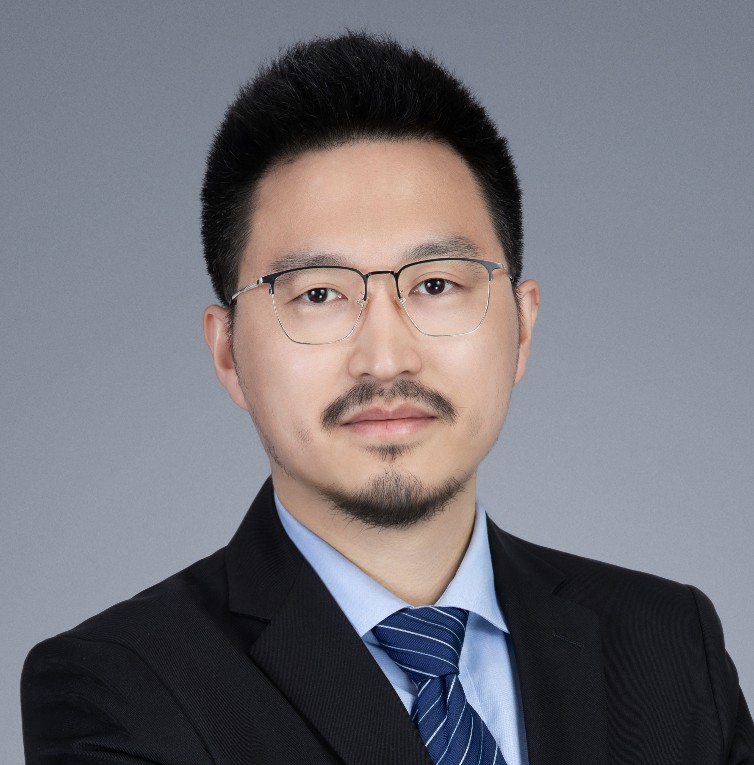
Professor Kai Wang is an Assistant Professor in the Department of Physiology and Pathophysiology, Peking University. He also serves as a PI in the State Key Laboratory of Vascular Homeostasis and Remodeling. He earned his Ph.D degree at Peking University and finished his postdoctoral training in Harvard Medical School/Boston Children’s Hospital and Cornell University from 2016 to 2021. His lab focuses on the interdisciplinary research on the stem cells and vascular organoid. He now serves as Associate Editor in the journal of Microvascular Research and Cell Organoid while sitting in the editorial board of Cell Transplantation. He has published 18 peer-reviewed papers in highly impacted scientific journals including Sci Adv, Adv Sci, Adv Mat, Biomaterials and et al. He also serves as ad hoc reviewer for journals including Sci Adv, ACS Nano, Angiogenesis and et al.
Research of Focus

His research interest has focused on developing stem cell derived vascular organoids for disease modeling and cell therapy.
1) Exploit key transcription factors to optimize the mass production of functional organoids for cell therapy.
2) Patient derived iPSCs for modeling diseases including atherosclerosis, Marfan Syndrome and mitochondrial diabetes.
3) Novel biomaterials including hydrogel and 3D scaffold for cell assembling, packaging and delivery.
Selected Publications
Liyan Gong, Yadong Zhang, Yonglin Zhu, Umji Lee, Allen Chilun Luo, Xiang Li, Xi Wang, Danyang Chen, William T. Pu, Ruei-Zeng Lin, Minglin Ma, Miao Cui, Kaifu Chen, Kai Wang*, Juan M. Melero-Martin*. Rapid generation of functional vascular organoids via simultaneous transcription factor activation of endothelial and mural lineages. Cell Stem Cell, 2025, 32 (8), 1200-1217 (Previews & Cover)
Yun Zhao#, Mengze Sun#, Zihang Pan#, Weijing Kong, Zixuan Hong, Wei Zhang, Bingbing Sun, Jingjing Zhang*, Xi Wang*, Kai Wang*. A novel quantitative angiogenesis assay based on visualized vascular organoid. Angiogenesis, 2025 Jan 3;28(1):10. doi: 10.1007/s10456-024-09967-z (Cover)
Zihang Pan#, Qiyang Yao#, Weijing Kong, Xiaojing Ma, Liangliang Tian, Yun Zhao, Shuntian Zhu, Sheng Chen, Mengze Sun, Jiao Liu, Simin Jiang, Jianxun Ma, Qijia Liu, Xiaohong Peng, Xiaoxia Li, Zixuan Hong, Yi Hong, Xue Wang, Jiarui Liu, Jingjing Zhang, Wei Zhang, Bingbing Sun, Sara Pahlavan,Youchen Xia, Weimin Shen, Yuyong Liu, Wenjian Jiang, Zhengwei Xie*, Wei Kong,* Xi Wang,* Kai Wang*. Generation of iPSC-derived venous endothelial cells for the modeling of vascular malformation and drug discovery. Cell Stem Cell, 2025,32(2),227-245. Doi: 10.1016/j.stem.2024.10.015 (Previews)
Umji Lee#, Yadong Zhang#, Yonglin Zhu, Allen Chilun Luo, Liyan Gong, Daniel M. Tremmel, Yunhye Kim, Victoria Sofia Villarreal, Xi Wang, Ruei-Zeng Lin, Miao Cui, Minglin Ma, Ke Yuan, Kai Wang*, Kaifu Chen*, Juan M. Melero-Martin*. Robust differentiation of human pluripotent stem cells into mural progenitor cells via transient activation of NKX3.1. Nature Communications, 2024, 15 (1), 8392. doi:10.1038/s41467-024-52678-8
Kai Wang, Ruei-Zeng Lin, Alex H. Ng, Xuechong Hong, Chin Nien Lee, Joseph Neumeyer, Gang Wang, Xi Wang, Minglin Ma, William T. Pu, George M. Church, Juan M. Melero-Martin*, Robust Differentiation of Human Pluripotent Stem Cells into Endothelial Cells via Temporal Activation of ETV2 with Modified mRNA. Science Advances 2020; 6(30): eaba7606. Doi: 10.1126/sciadv.aba7606
Contact information
Kai Wang
Assistant Professor
Department of Physiology and Pathophysiology
Peking University Health Science Center
Xueyuan Road 38, Haidian District
Email: kai.wang88@pku.edu.cn
Lab website:https://www.x-mol.com/groups/kai_wang_pku
Google Scholar : https://scholar.google.com/citations?hl=en&user=51QhyuYAAAAJ&view_op=list_works&sortby=pubdate
Twitter:@KaiWang_PKU